
On the morning of May 3, 2023, anyone holding Bed Bath & Beyond opened their broker and found BBBY gone. In its place sat BBBYQ, quoted at a few cents. The shares had not vanished. They had moved from Nasdaq to the over-the-counter market, and for five more months they kept trading every day.
That is the short answer to what happens to a delisted stock: delisting removes a stock from an exchange, not from your account. The shares still exist and usually keep trading over the counter. What they end up worth depends on why the exchange removed them, and Bed Bath & Beyond is the clearest recent case of how that plays out, from its Chapter 11 filing on April 23, 2023 to the day its shares were cancelled on September 29, 2023.
If you own a stock that just got a delisting notice, the feeling is familiar: the ticker looks wrong, the price looks absurd, and nobody explains what to do next. This post walks through each step Bed Bath & Beyond holders went through, the reasons stocks get delisted in general, and what you can actually check when it happens to a stock you hold.
What Happens When a Stock Is Delisted
An exchange such as Nasdaq or the NYSE sets rules a company must keep meeting to stay listed: a minimum share price, filings on time, enough public shareholders. Break them for long enough, or file for bankruptcy, and the exchange removes the stock.
The SEC's own investor bulletin on bankrupt companies spells out the part most people miss. There is no federal law that stops a security from trading just because the company is bankrupt, so a delisted stock often keeps trading on over-the-counter markets. The same bulletin warns that common stock in a bankrupt company is likely to be worthless, because shareholders are last in line behind bondholders, suppliers and employees.
So a delisted stock usually has a price, a ticker and a market. It does not have the exchange's listing standards, its disclosure checks or its liquidity anymore. The price can keep moving long after the question of what the shares are worth has been settled.
Bed Bath & Beyond, Step by Step
From the filing to the suspension took ten days. The road there took a year, and each stop left a trace in the filings.
| Date | Event | Price or detail |
|---|---|---|
| Aug 16, 2022 | Meme rally, trading halted several times | Up to $28.60 intraday |
| Aug 16-17, 2022 | Ryan Cohen sells his whole stake | Stock fell about 40% on Aug 19 |
| Jan 5, 2023 | Company warns of possible bankruptcy | Closed at $1.69 |
| Feb 7, 2023 | Emergency offering closes | About $225 million raised |
| Apr 23, 2023 | Chapter 11 filing | Last sale $0.30 on Apr 20 |
| May 3, 2023 | Nasdaq suspends, OTC trading starts as BBBYQ | Opened at 7.5 cents |
| Sep 29, 2023 | Plan takes effect, shares cancelled | No value |
The meme rally, August 2022
Between July 29 and August 11, 2022, the stock rose from $5.03 to $10.63, according to a later federal court opinion in a shareholder suit. On August 16, Reuters reported it jumped as much as 78.8% to $28.60 in a single session. Within days, activist investor Ryan Cohen had sold his entire stake, and the stock dropped about 40% on August 19.
Nothing in that rally changed the company's debt. It changed only who held the shares when the bad news arrived.
The warning, January 2023
On January 5, 2023, the company said it might have to file for bankruptcy. CNBC reported the stock fell about 30% to close at $1.69, leaving a market value of about $149 million. A few weeks later, Nasdaq confirmed the company was back in compliance with its filing rule after a late quarterly report, a reminder that a listing problem had already been brewing.
The Offering That Needed a Listing
On February 7, 2023, Bed Bath & Beyond closed an offering of convertible preferred stock and warrants. The offering filing shows gross proceeds of about $225 million at closing, with up to roughly $800 million more over ten months. That second part came with conditions: the common stock had to remain listed on a national exchange, the company needed enough authorized shares, and it could not have filed for bankruptcy.
Read that list again. The money that was meant to keep the company alive depended on the company not being delisted and not being bankrupt. When either happened, the rest of the funding was gone. The same deal also created more than 95 million warrants on common stock, which is how stock dilution works when a company sells new shares into a falling price.
A listing is not just a place to trade; for a company short of cash it can be a condition of its financing. That is worth knowing before the delisting notice, not after.
Why Stocks Get Delisted
Bed Bath & Beyond left Nasdaq for the most final reason there is. Most delistings fall into four groups, and the outcome for holders differs a lot between them.
| Reason | What triggers it | What holders usually end up with |
|---|---|---|
| Bankruptcy | A Chapter 11 or Chapter 7 filing | Shares often cancelled |
| Low share price | Closing bid under $1 for 30 business days | Time to fix it, often by reverse split |
| Late filings | Missing annual or quarterly reports | Notice and a deadline to file |
| Merger or buyout | Company bought outright | Cash or the buyer's shares |
Bankruptcy
Nasdaq's own reference library describes the routine. When a company announces a bankruptcy filing, Nasdaq usually halts trading for news, lets it resume about 30 minutes later, then sends a letter saying the stock will be delisted in nine calendar days unless the company requests a hearing within seven. For a bankrupt company, a hearing request does not stop the suspension, so any trading during the appeal happens over the counter.
The $1 rule
Nasdaq requires a closing bid of at least $1. A stock below that for 30 consecutive business days gets a notice and 180 calendar days to close at $1 or more for 10 straight business days. A stock that closes at $0.10 or less for ten consecutive days gets a delisting determination with no compliance period, per the rule as the SEC approved it. Many companies answer the $1 rule with a reverse stock split, which lifts the price without changing what the company is worth.
Late filings and buyouts
A company that misses its reports gets a notice and a window to catch up, as Bed Bath & Beyond did with a quarterly report it filed late in January 2023. A buyout is the friendly version of delisting. When Elon Musk's purchase of Twitter closed on October 27, 2022, each share was exchanged for $54.20 in cash, trading was suspended before the open the next day, and the NYSE removed the stock on November 8. Twitter holders were delisted and paid; Bed Bath & Beyond holders were delisted and waited.
Life as BBBYQ on the OTC Market
The delisting notice arrived on April 24, 2023, one day after the filing. Nasdaq cited its rules on bankruptcy, the company said it would not appeal, and trading was suspended at the open on May 3.
That morning the stock reappeared on the OTC Pink market as BBBYQ. The fifth letter is a code: in FINRA's symbol table, Q means the company is involved in bankruptcy proceedings. Other fifth letters carry their own warnings, such as E for a company late with its SEC filings.
MarketWatch reported BBBYQ opened at 7.5 cents on its first OTC day and closed up 30.4% at 9.8 cents. InvestorPlace counted more than 82 million shares traded that day. A bankrupt stock rising 30% on its first day off the exchange tells you how many people were still buying, not what the shares were worth.
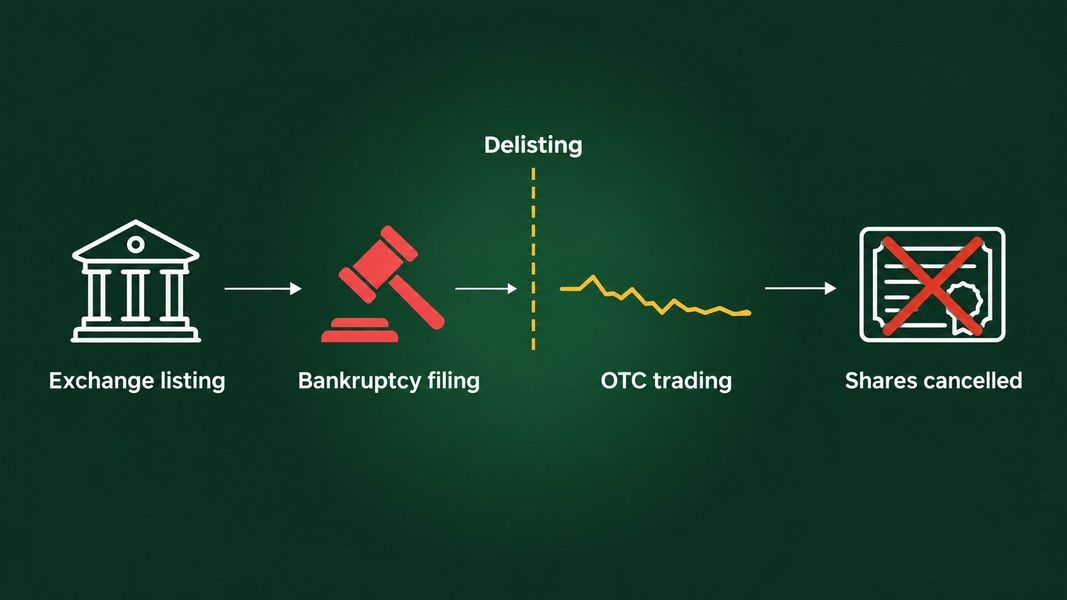
The company's own annual report, filed in June 2023, was blunt about the new venue. It called the OTC Pink market significantly more limited than Nasdaq, said quotes there likely meant a less liquid market, and said it could not promise broker-dealers would keep quoting the stock at all. Wider spreads and thinner trading are the normal cost of leaving an exchange.
September 29, 2023: The Day the Shares Ended
The bankruptcy court confirmed the liquidation plan on September 14, 2023, and it took effect on September 29. The company, by then renamed 20230930-DK-Butterfly-1, Inc., filed a final 8-K with a cautionary note to holders: all common stock and preferred stock were cancelled on the effective date without consideration and have no value. The company said it would file to deregister its stock and stop filing reports.
That sentence is the whole answer for Bed Bath & Beyond holders. The delisting in May did not set the value of the shares. The plan in September did, and the plan gave them nothing.
The SEC bulletin describes the confusion this creates. The old shares can trade for months, even years, while a case runs, and that trading makes them look alive. A price on a Q ticker is what the last buyer paid, not a claim the bankruptcy plan will honour.
What the Brand Sale Did Not Change
There was one more twist, and it fooled plenty of people. On June 28, 2023, Overstock bought the Bed Bath & Beyond brand and its intellectual property, then relaunched its own website as bedbathandbeyond.com on August 1. In November 2023, Overstock renamed itself Beyond, Inc. and moved to the NYSE under the ticker BYON.
So a company selling under the Bed Bath & Beyond name kept trading on a major exchange, while BBBYQ holders received nothing. The buyer purchased a brand, not the bankrupt company and not its shares. A familiar name on a new ticker says nothing about the old stock.
Can a Delisted Stock Come Back?
Sometimes, and the reason decides it. A company that gets a low-price or late-filing notice can fix the problem inside its compliance window and never leave the exchange at all. In bankruptcy the odds are much worse, and the exceptions are rare enough to be famous. Hertz filed for Chapter 11 in May 2020, and its old shareholders received $1.53 a share in cash plus new stock and warrants in 2021, because the company turned out to be worth more than it owed.
Bed Bath & Beyond was the usual case, not the exception. Its liquidation left nothing after the creditors, which is what the SEC bulletin says to expect.
What to Check if Your Stock Is Delisted
The useful moves come from one question: why was it delisted? Each answer points to a different document.
- Find the reason in the 8-K. A company must disclose a delisting notice under Item 3.01 of Form 8-K. That filing names the rule and whether the company will appeal.
- Bankruptcy: read the plan, not the price. The disclosure statement and the plan say what each class of holder receives. If common stock gets nothing, the OTC quote will not change that.
- Low price or late filings: watch the deadline. The notice gives a compliance window. A reverse split or a filed report can end the problem.
- Buyout: check the merger terms. Cash or shares arrive through your broker; there is usually nothing to do.
- Before trading the OTC ticker, look at the spread. Thin markets can make a quoted price hard to get.
- For a cancelled share, ask a tax adviser how the loss is treated in your country.
Where an AI Read Fits, and Where It Stops
A delisting rarely comes out of nowhere. Bed Bath & Beyond's warning in January, its offering in February and its filing in April were all public news before the ticker changed.
That is the kind of context Primo Trade puts in one place for a US-listed stock or ADR. A ticker analysis shows Recent News with dates beside the price chart, Key Insights tagged as news, fundamental, technical or sentiment, and a Primo Score that includes a Risk axis. A headline about a listing notice or a going-concern warning is the cue to open the filing itself.
Its limits matter as much. Primo Trade's read of a chart photo covers the trend, volatility, volume and pattern on the screen; it cannot read a bankruptcy plan or tell you what a court will give shareholders. Primo Trade gives AI-generated analysis for information and education. It is not financial advice. Markets carry risk; do your own research before you trade.
What Bed Bath & Beyond's Delisting Teaches
A delisted stock is still a stock: it leaves the exchange, not your account, and it usually keeps trading over the counter. Bed Bath & Beyond showed every stage of that path in five months, from a Chapter 11 filing on April 23, 2023 to BBBYQ trading for cents to every share cancelled on September 29.
The price along the way never told holders what the shares were worth. The reason for the delisting did. Bankruptcy usually ends with old shares cancelled, a low price or late filings come with a deadline to fix, and a buyout ends with cash or new shares. A brand that survives under another company's ticker does not carry the old shareholders with it.